Keet Health
It all started with a simple question.
What if physical therapists could spend more time helping patients—and less time filling out forms? We built a better experience to make that a reality.
Product Redesign
Research Insights
Conducted ethnographic research in Austin, Houston and Chicago. Key takeaways included:
PTs are highly relational and people-oriented.
PTs rely heavily on memory, and sort through old notes to find forgotten numbers/details when necessary.
PTs bounce between multiple patients (often seeing 4 patients within an hour time span).
PTs celebrate patient's progress – expressing their strong desire to get the patient back in action.
PTs often wait until after visit (or EOD) to document, dreading the time consuming process.

THE ZONES:
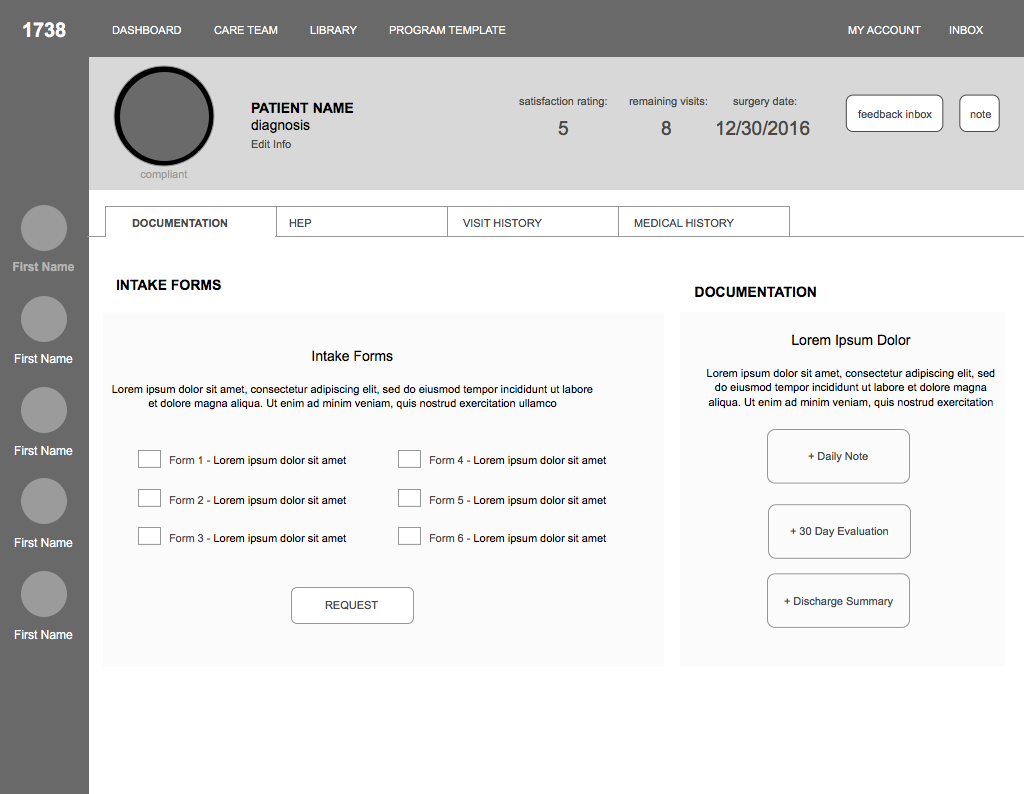
One of our primary goals for the physical therapist (PT) was to align the documentation process with their current flow. In other words, to design a system that they no longer have to conform to, but rather one that enriches the experience using technology to add value and remove unnecessary work for the PT.
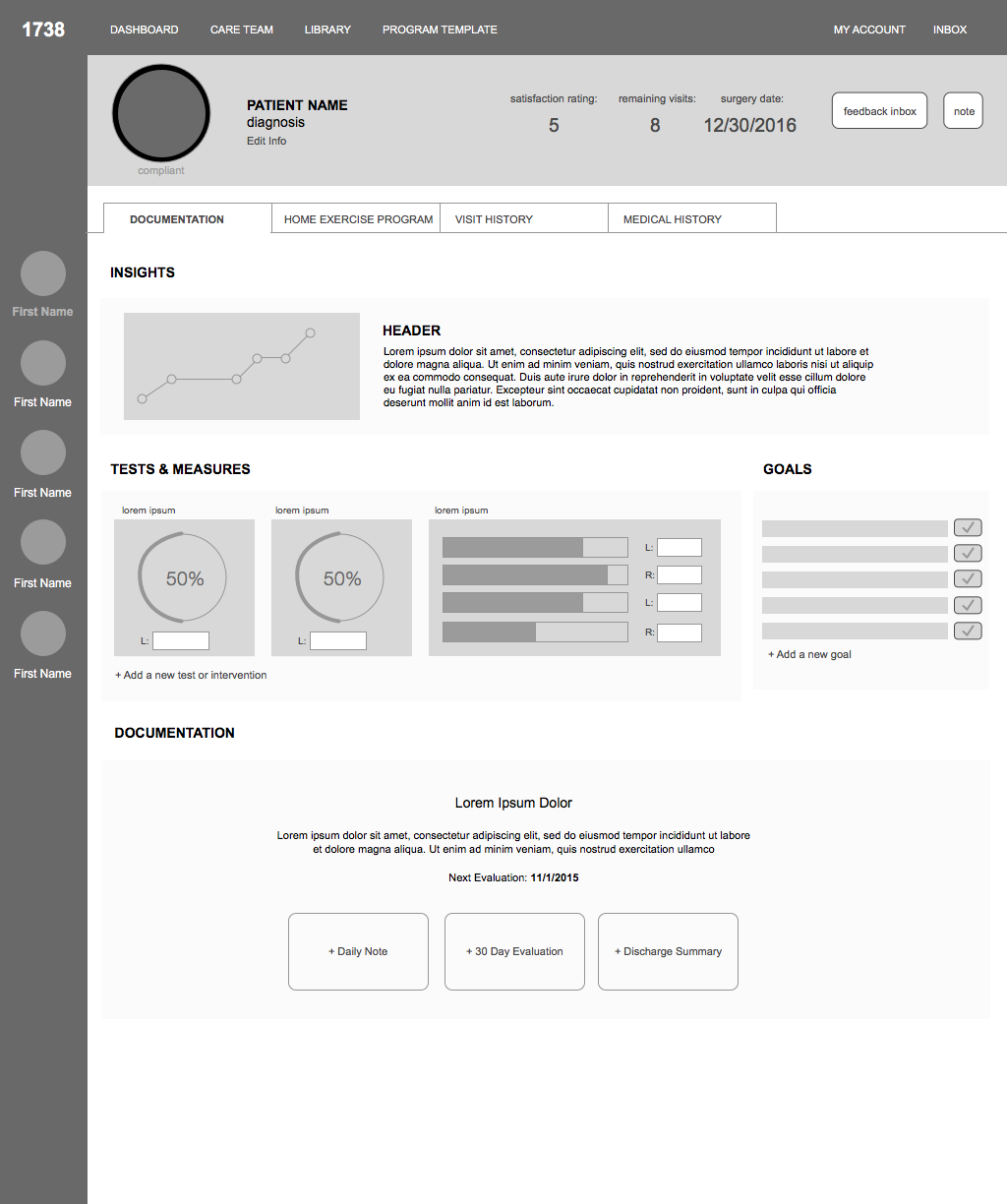
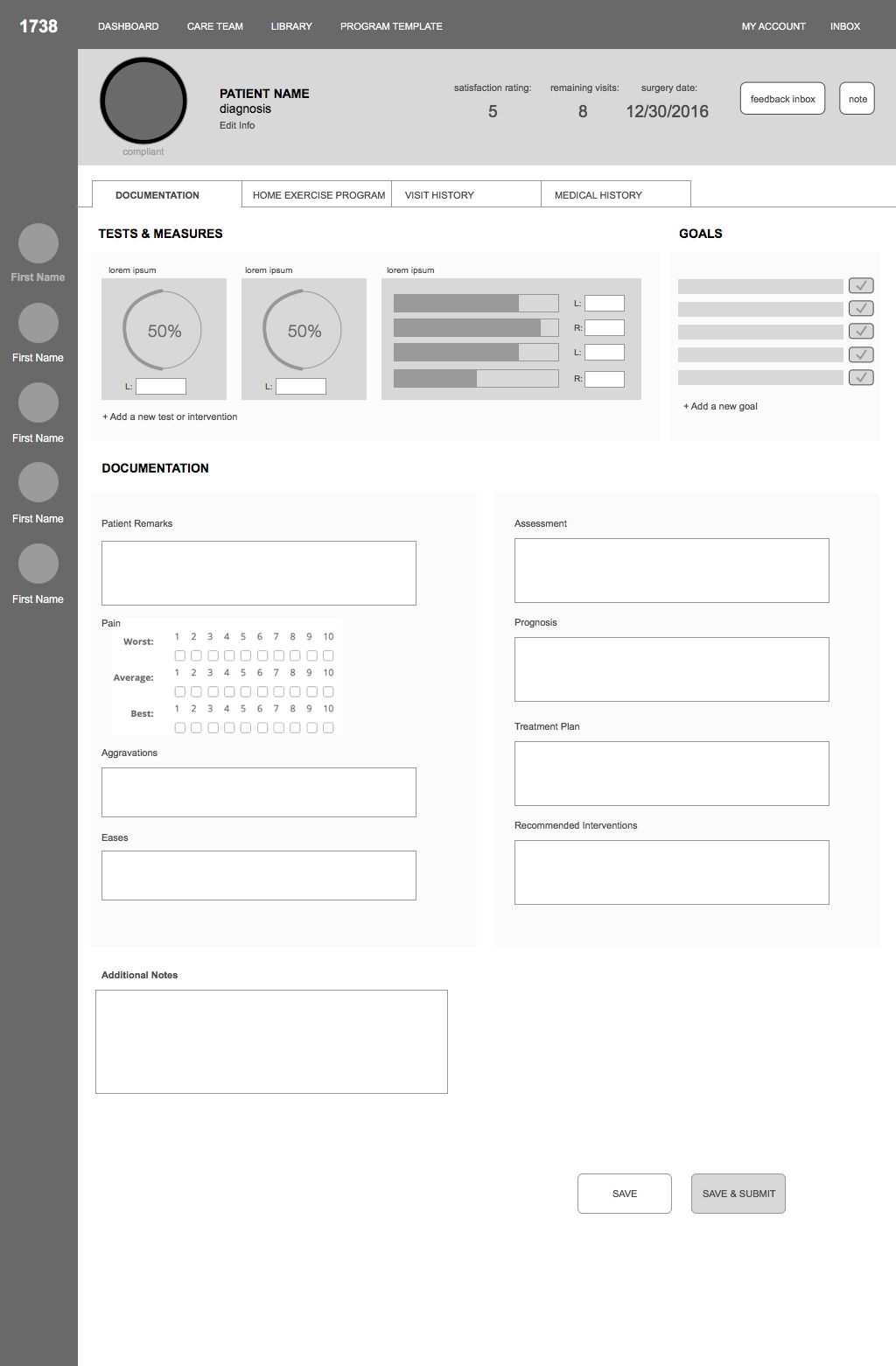
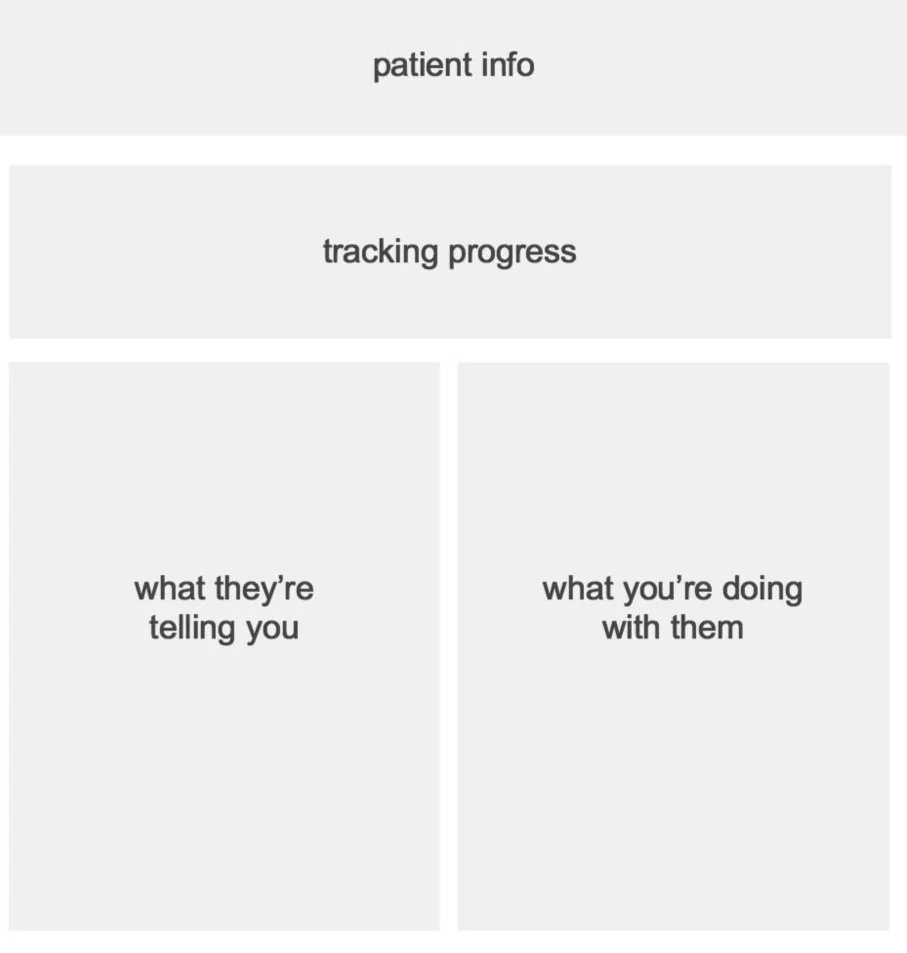
The documentation process is consistently dreaded by each PT. Many systems have the documentation forms in a linear progression when in fact the PT's are bouncing around to different sections based on what the patient is communicating. Better utilizing the screen real estate we can accommodate these events by utilizing a two column grid.
Documentation Process
DESIGN HIGHLIGHT
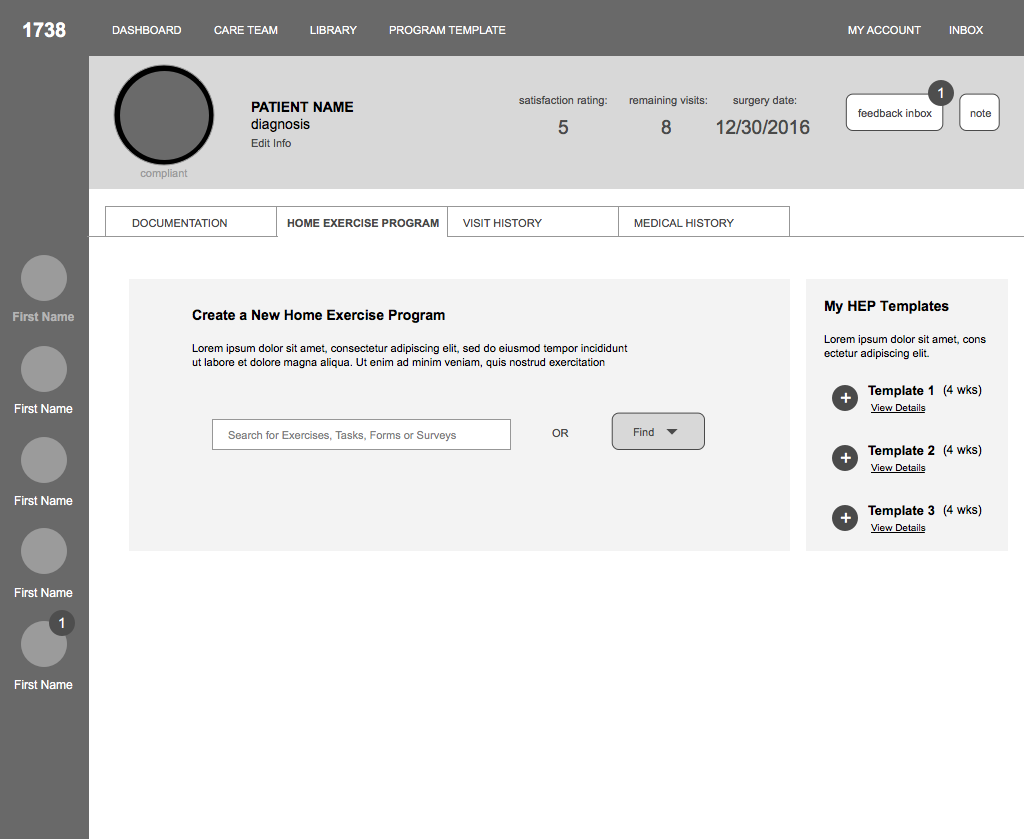
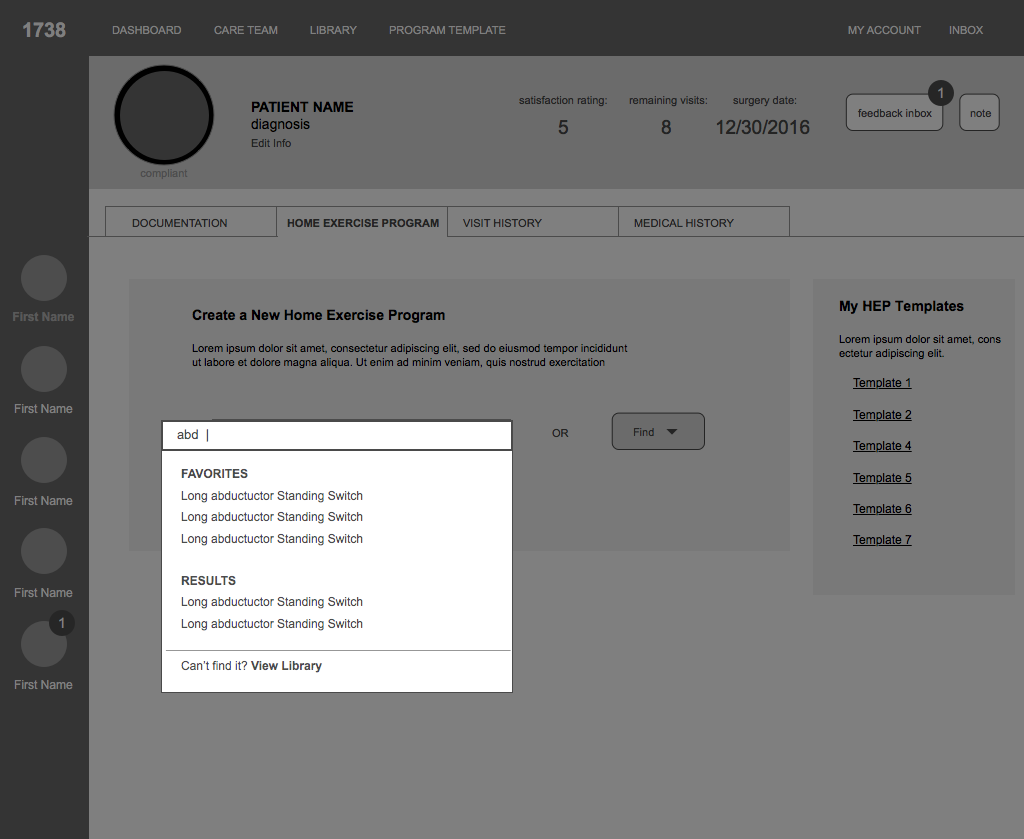
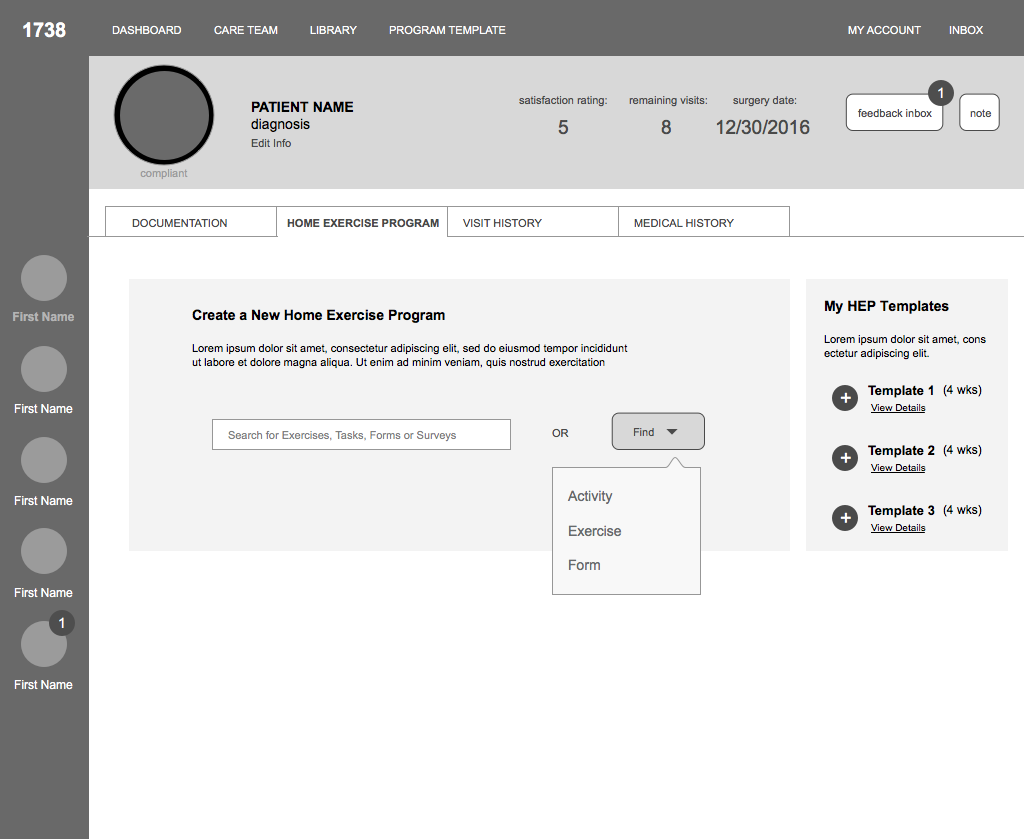
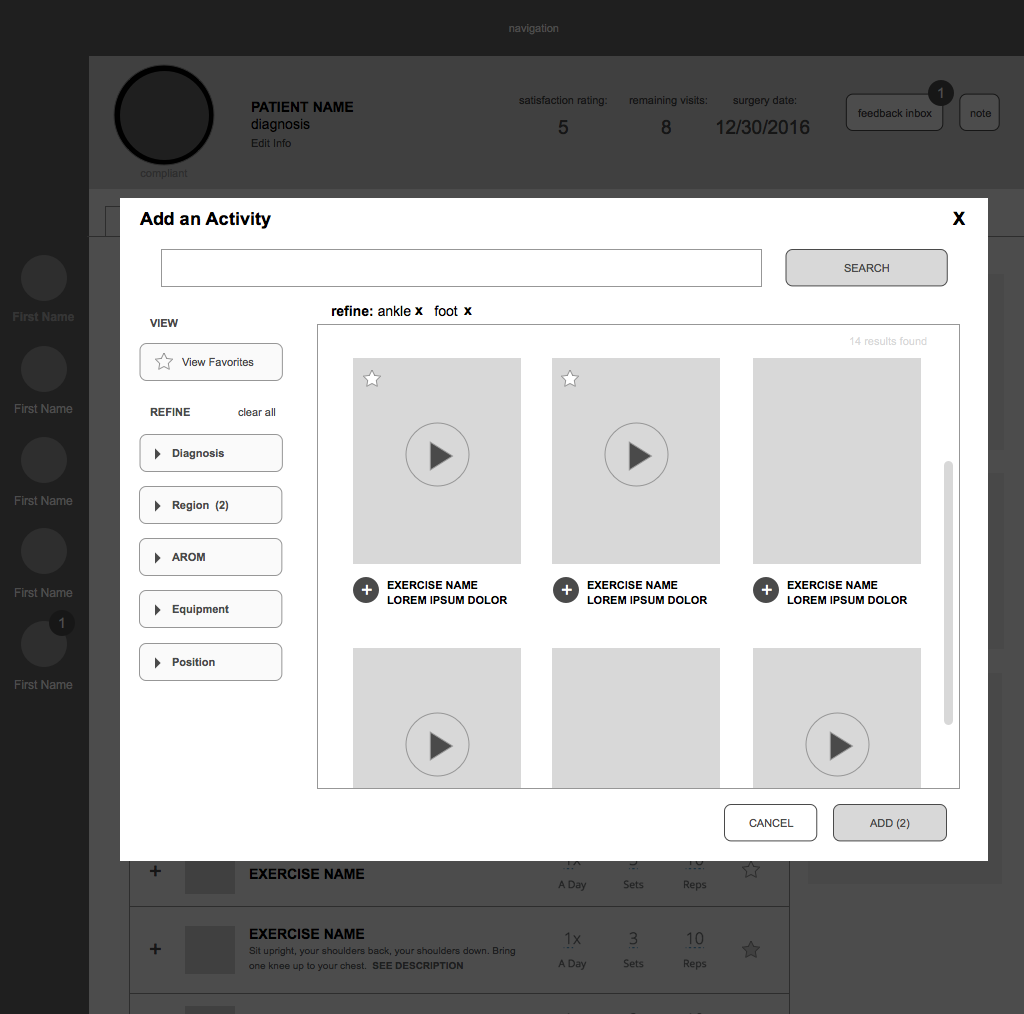
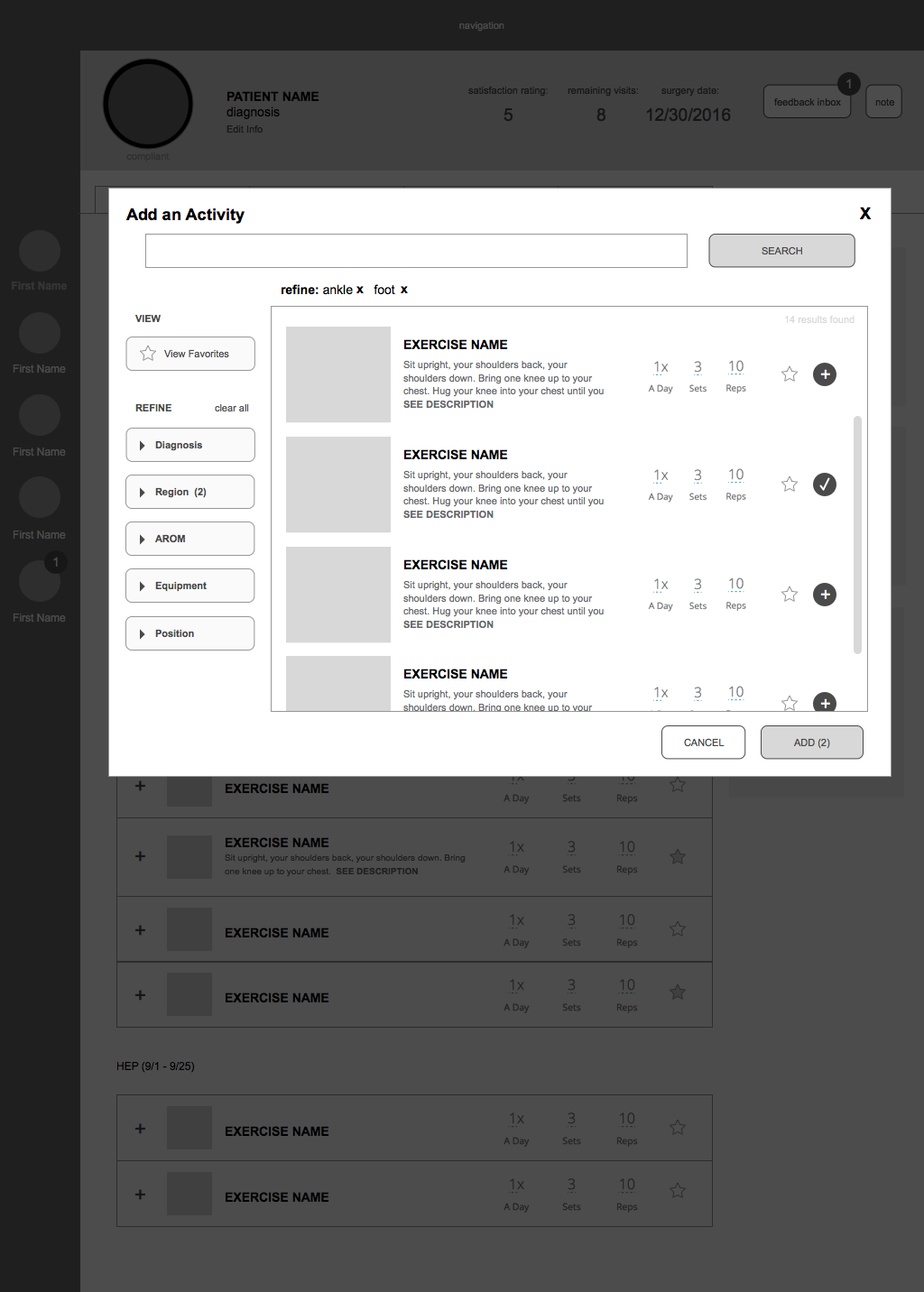
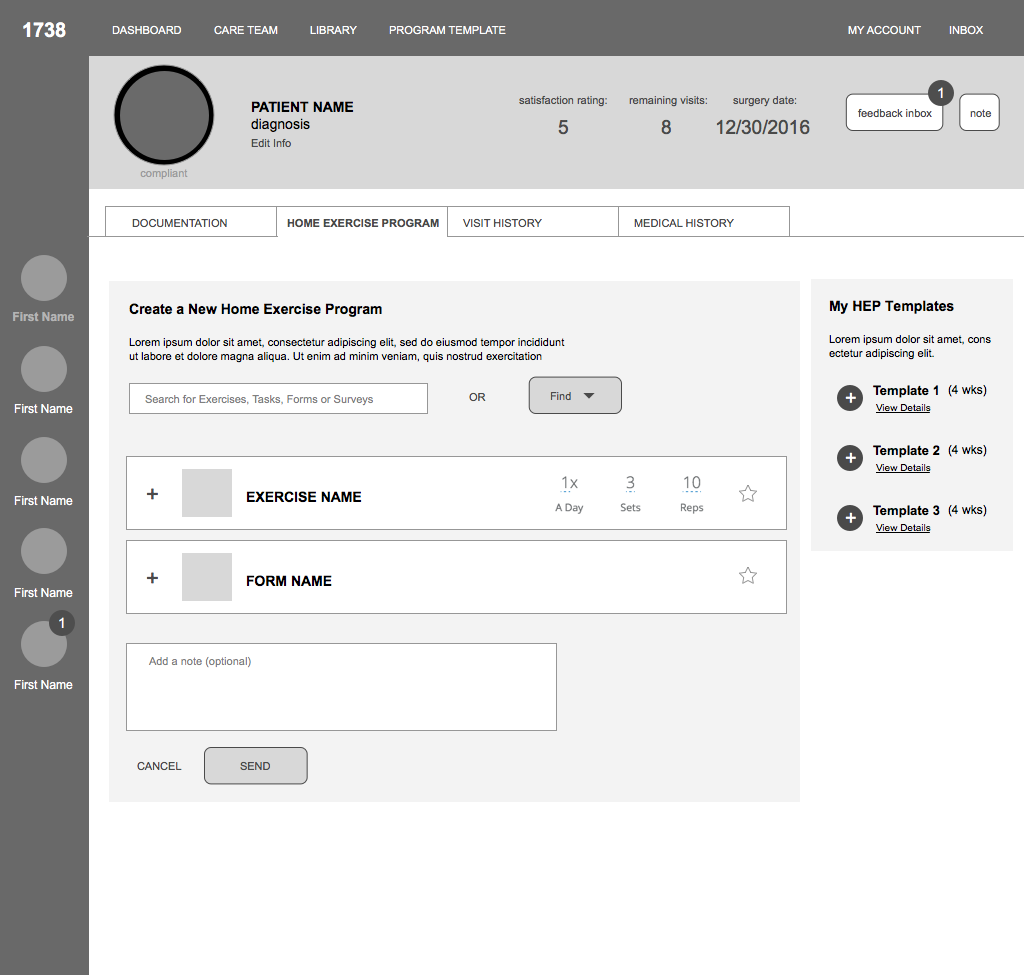
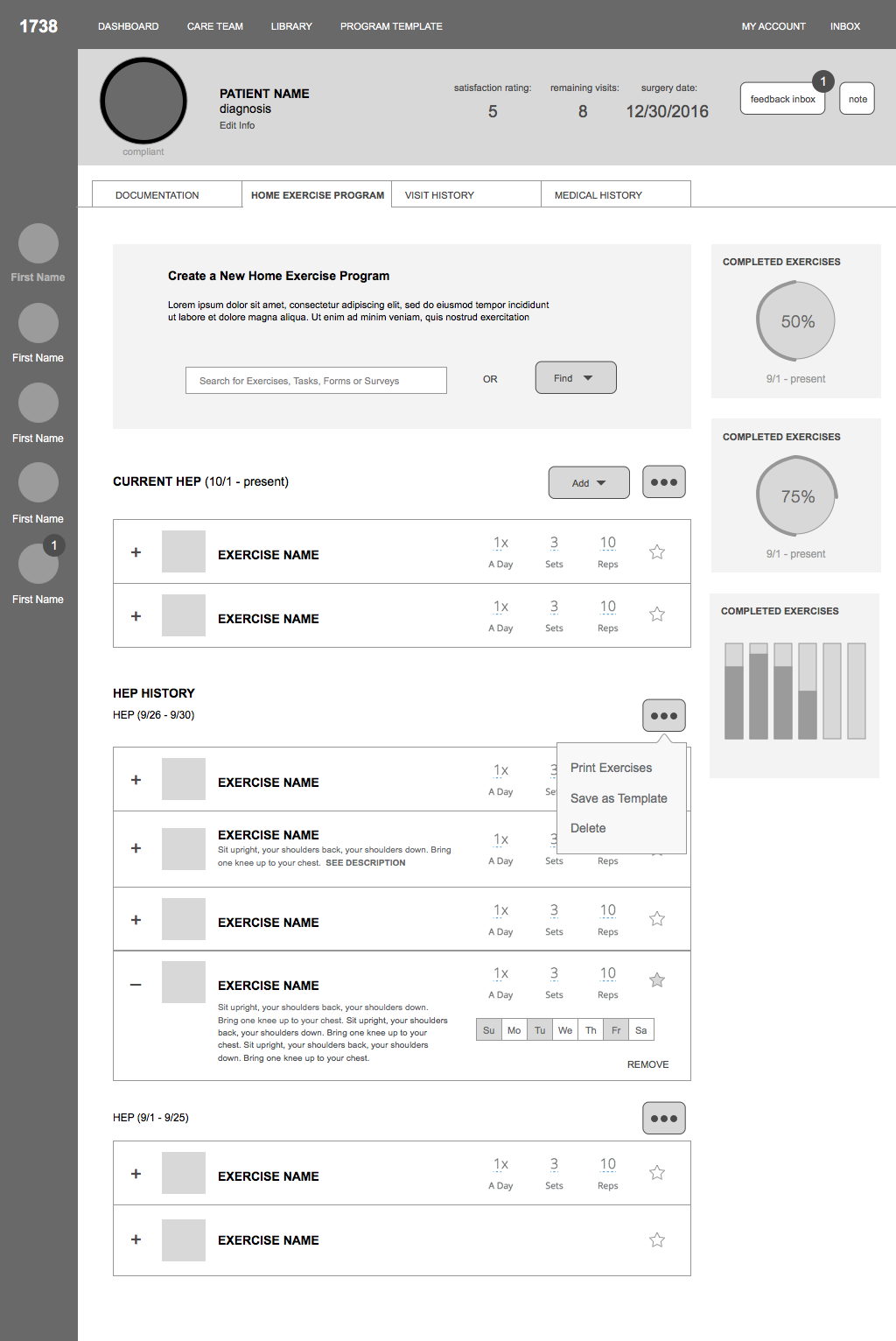
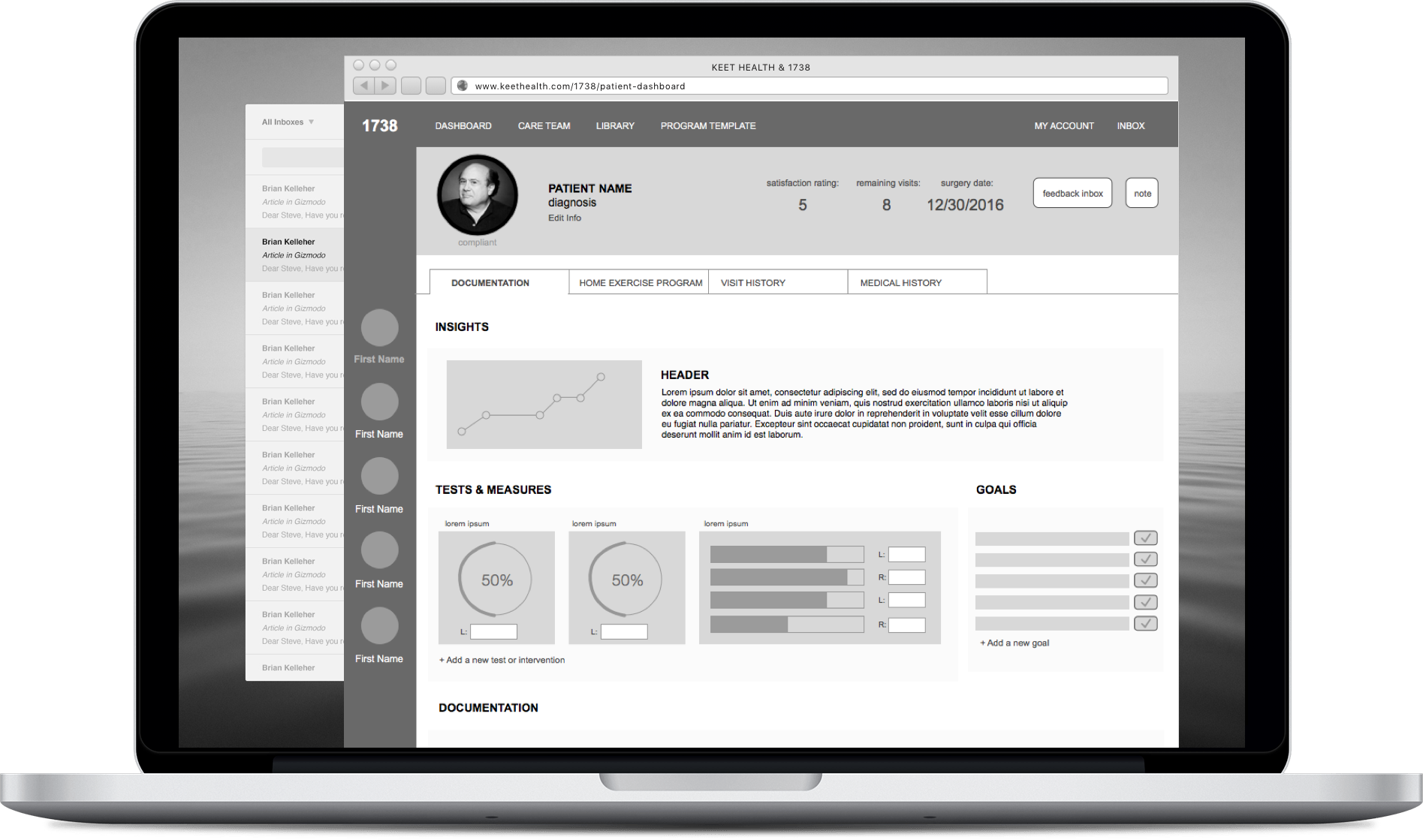
A big learning for us what that documentation does not happen in a linear flow. The PTs are moving from patient to patient. So I designed a navigation to support their workflow, allowing them to easily navigate between patients scheduled for the day. To help reduce the burden to remember everything, I visually represented patients’ progress making it glanceable, easy to find and easy to celebrate when the goal was hit.